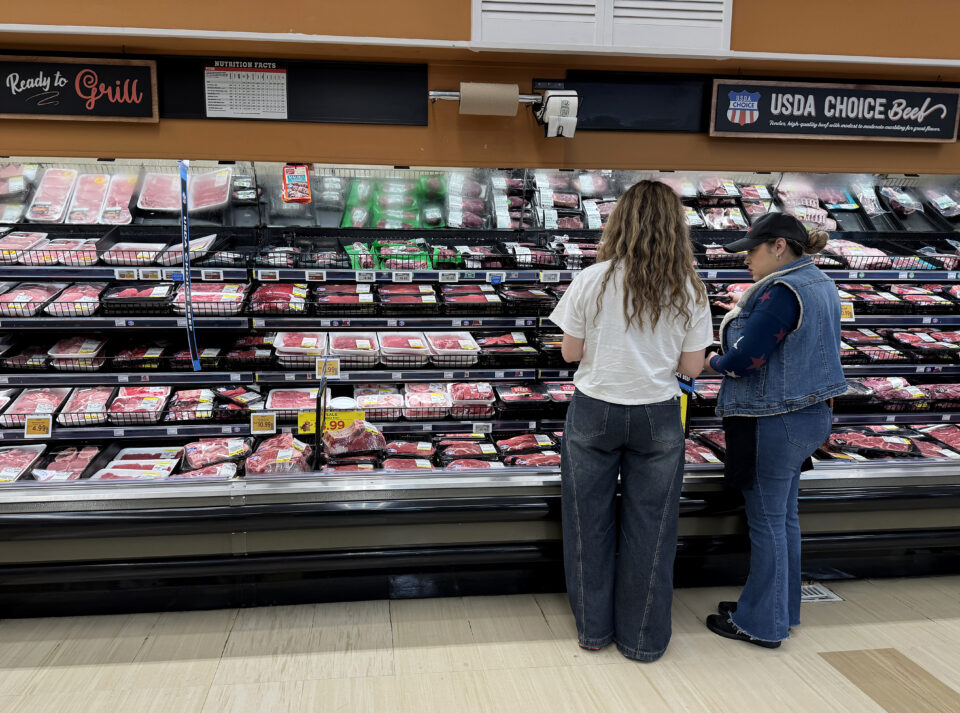
Customers shop for beef at a grocery store in Los Angeles, California, on April 6, 2026. | Justin Sullivan/Getty Images This story appeared in The Logoff, a daily newsletter that helps you stay informed about the Trump administration without letting political news take over your life. Subscribe here. Welcome to The Logoff: The economic impact of the Iran war is becoming clearer. What’s happening? On Friday, we learned that inflation climbed to 3.3 percent in March, almost 1 percentage point higher than it was in February and the quickest inflation has grown in nearly four years. Unsurprisingly, consumers aren’t thrilled. New data from the University of Michigan, also released Friday, shows consumer sentiment from April under 50, its lowest point ever. It’s not even mid-April, so for now, those numbers are preliminary — but they point in a concerning direction. What does Iran have to do with this? Shortly after the war began in late February, Iran closed the Strait of Hormuz, a crucial passage for oil and natural gas. It has remained largely closed ever since, driving gas prices over $4/gallon in the US and making many more goods, including food, more expensive. Will the ceasefire fix prices? No. The ceasefire,…
Why inflation is up