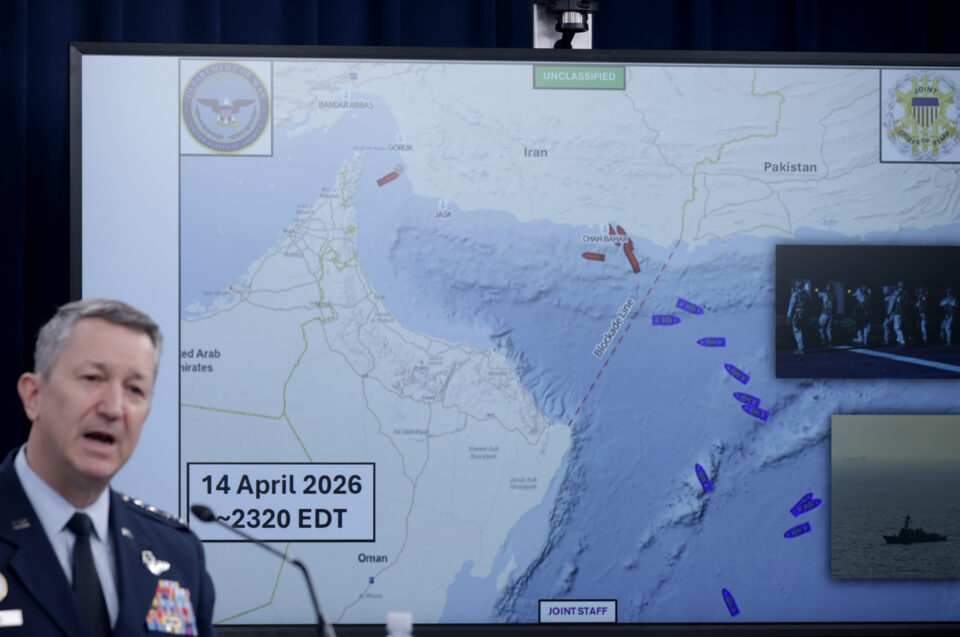
Chair of the Joint Chiefs of Staff Gen. Dan Caine speaks as he displays a map showing the United States Navy’s blockade of the Strait of Hormuz during a press briefing at the Pentagon on April 16, 2026, in Arlington, Virginia. | Alex Wong/Getty Images The aorta of the global energy economy has been clogged for more than a month now. The closure of the Strait of Hormuz — the narrow waterway connecting the Gulf oil producers to global markets — has throttled worldwide energy production and driven up the prices of gasoline, diesel, fertilizer, plastics, and myriad other commodities. This has led many Americans to fear that their rising energy bills are just the beginning — and that America’s ongoing conflict with Iran could push up grocery prices too. And yet, that foot still hasn’t dropped. According to March’s Consumer Price Index (CPI), food prices were no higher last month than they had been in February. What’s more, on Friday, the US and Iran reportedly reached a deal to completely reopen the strait for the duration of their ceasefire. A permanent peace agreement, however, has yet to be negotiated. All this raises the questions: Are American grocery shoppers out…
An expert forecasts how the Iran war could hit your budget